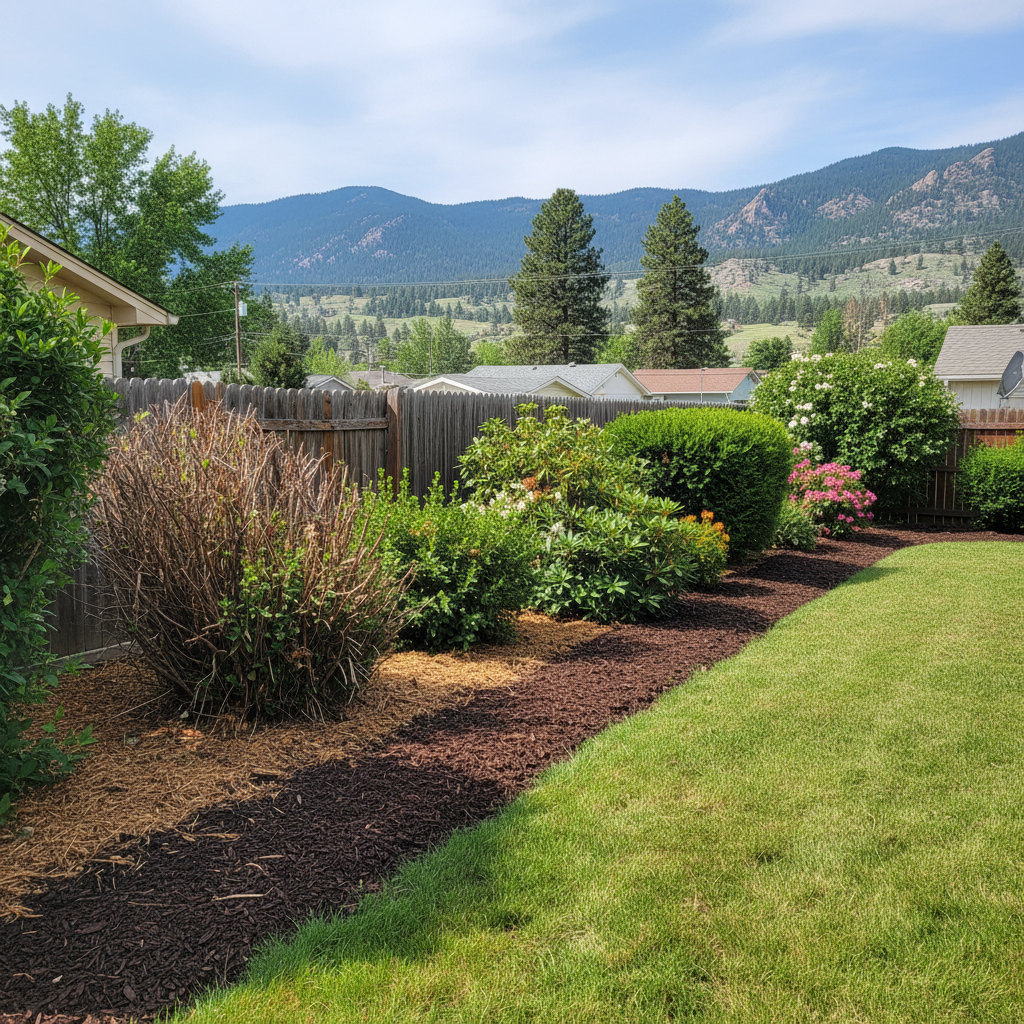
Alright, let's talk about keeping your shrubs and bushes looking good around Helena. It's not just about hacking at them with some shears; there are actually two main ways folks approach trimming, and knowing the difference can save you a lot of headache and even money down the line. We're talking about shearing versus selective pruning.
What's Shearing?
You've seen shearing. It's that uniform, often boxy or rounded look you get when someone takes hedge trimmers and just cuts everything to an even surface. Think of those perfectly manicured hedges around older, more formal gardens, or maybe the row of junipers along a commercial property. It's fast, it's efficient, and it gives a very neat, structured appearance right away.
For some plants, especially those that are naturally dense and grow quickly, shearing can work. It creates a thick outer layer of foliage. But here's the kicker: it mostly cuts the new growth. Over time, what happens is you get this really dense outer shell, but the inside of the plant becomes sparse and woody. It doesn't get much light or air circulation, which can lead to problems.
What's Selective Pruning?
Now, selective pruning is a bit more art than science, though there's plenty of science behind it too. Instead of just cutting everything to a line, you're looking at the plant, identifying individual branches, and making cuts back to a main branch, a side branch, or a bud. The goal isn't just a uniform shape; it's about maintaining the plant's natural form, encouraging healthy growth, improving air circulation, and removing dead, diseased, or crossing branches.
This takes more time, no doubt about it. You're often using hand pruners, loppers, or a hand saw, not just whizzing over everything with a power tool. But the benefits? They're huge for the plant's long-term health and appearance.
Cost: Upfront vs. Long-Term
Let's be honest, cost is always a factor. Shearing is almost always cheaper upfront. A crew can come in, buzz through your hedges in a fraction of the time it takes to selectively prune. So if you're just looking at the bill for that one visit, shearing wins on price, hands down.
But think long-term. With shearing, because you're constantly cutting off the new growth, the plant tries to compensate by producing even more new growth right at the surface. This means you often need to shear more frequently to maintain that crisp look – maybe two or three times a season for fast-growing stuff. Plus, as I mentioned, the plant can get unhealthy inside. That can lead to more significant problems down the road, like disease, pest infestations, or even the need to replace the plant entirely if it declines too much. Replacing a mature shrub isn't cheap.
Selective pruning costs more per visit because it's more labor-intensive. A skilled arborist or landscaper is taking their time, making thoughtful cuts. However, because it promotes healthier growth and maintains the plant's natural vigor, you often don't need to prune as frequently. Many plants only need selective pruning once a year, or even every couple of years, depending on the species and how fast it grows. So, while the per-visit cost is higher, the overall annual or multi-year cost might actually be comparable, or even less, considering the extended life and health of your plants.
Durability & Maintenance
This is where selective pruning really shines, especially here in Helena. Our winters can be brutal, with heavy snow loads and icy winds. A plant that's been selectively pruned has a stronger, more open structure. It allows snow to fall through without breaking branches, and air circulates better, reducing the risk of fungal diseases that thrive in damp, stagnant conditions. The plant is just tougher, more resilient.
Sheared plants, with their dense outer shell and often weak inner structure, are more susceptible to damage. Heavy snow can sit on top of that dense foliage and snap branches right off, or split the plant down the middle. Plus, that lack of air circulation I mentioned? It's a breeding ground for problems. You'll find yourself dealing with more pest issues and diseases, which means more maintenance in terms of treatments, or worse, replacements.
Appearance
This is subjective, but generally, sheared plants have a formal, architectural look. If that's what you're going for, great. But for most residential landscapes, especially with the natural beauty surrounding Helena, a more organic, natural look tends to fit better.
Selective pruning enhances the plant's natural form. It allows the plant to flower and fruit more effectively, showing off its best characteristics. You get a softer, more graceful appearance that integrates beautifully into a landscape, rather than looking like a rigid block.
My Recommendation for Helena Homeowners
Given our climate and the typical landscape styles we see around here – from the older homes in the Mansion District to the newer builds up in the hills – my strong recommendation is selective pruning. It's simply better for the long-term health and beauty of your plants.
We deal with cold winters, heavy snow, and sometimes dry summers. A healthy, well-structured plant is going to handle those conditions a lot better than one that's been repeatedly sheared into submission. You'll have fewer issues with broken branches, less disease, and your plants will just look better, longer.
It's an investment in your landscape, not just a quick fix. If you've got questions about what's best for your specific shrubs, or if you're looking for help getting your landscape in shape, don't hesitate to reach out to us at Helena Tree Service. We've been doing this a long time and we know what works for our local conditions.